🗓 Released Dec 3, 2024
🔁
Cycle Advice
CautionFirst-generation product — no release history to base predictions on
💰
Deals Advice
neutralNo upcoming deals on the radar
First-generation product — no release history to base predictions on
No upcoming deals on the radar
| AIB Card | Boost Clock | Cooling | TDP | Best For |
|---|---|---|---|---|
| Intel Limited Edition | 2670 MHz | Dual-fan | 190W | Reference design, Intel warranty |
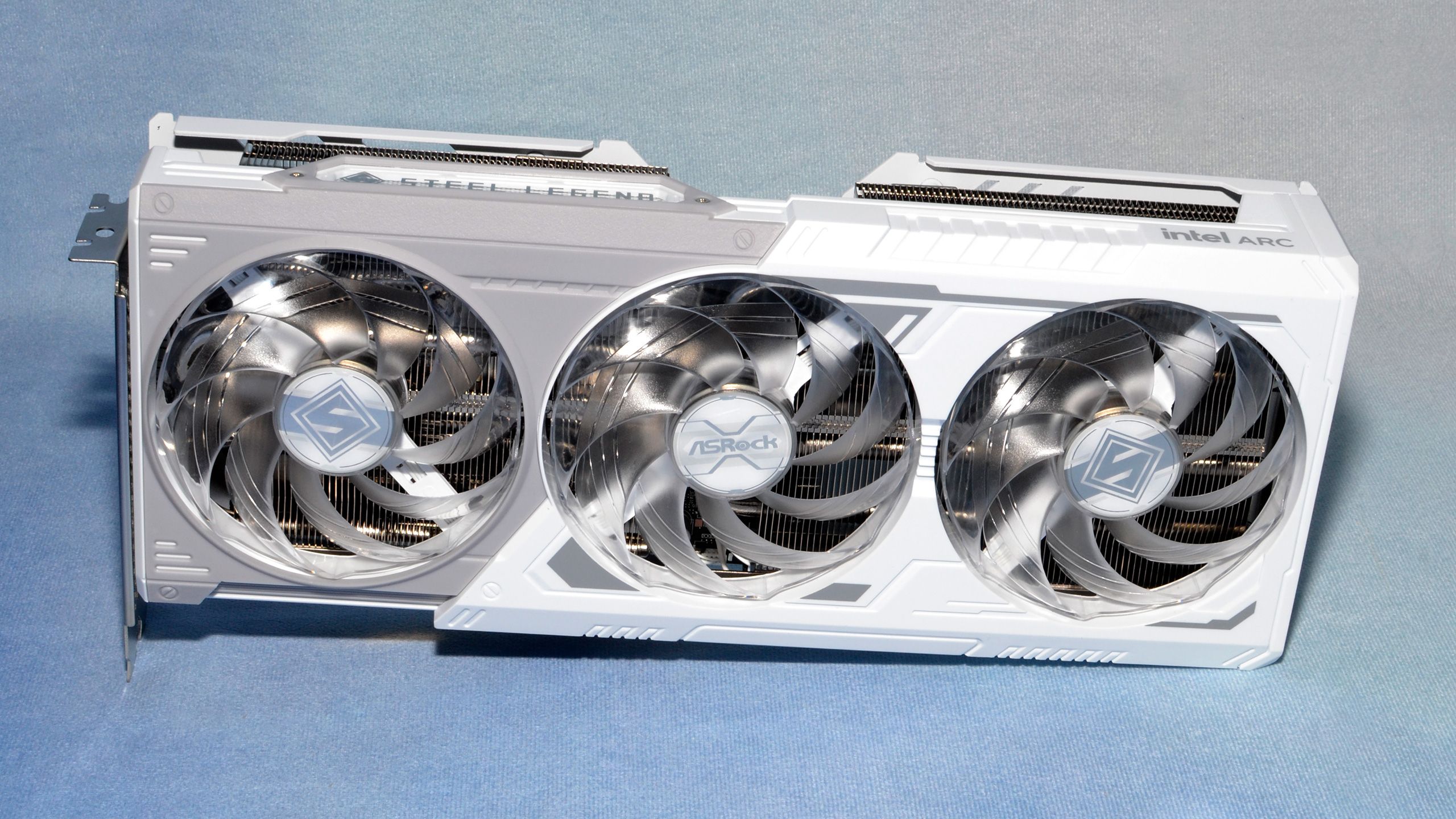
| ASRock Steel Legend | 2690 MHz | Dual-fan | 190W | RGB, aftermarket warranty |
The Intel Arc B580 is Battlemage's breakout hit — 12GB GDDR6 and XeSS upscaling at $249. It punches above its price in rasterization: NVIDIA's $299 RTX 5060 is faster on average — roughly 20–25% at 1080p in independent reviews — but the B580 answers with 12GB of VRAM against 8GB and a $50 lower MSRP. Intel's drivers have matured significantly since launch, with driver 32.0.101.8626 (March 2026) delivering up to 2x faster shader compilation on first loads and ~9% FPS gains in select titles, and 2026 drivers also added XeSS 3 Multi-Frame Generation. Note that the 2026 memory shortage has lifted street prices to around $310–$370 as of October 2026, above the $249 MSRP. At or near MSRP the B580 is a genuine disruptor.
4GB more VRAM than the RTX 5060 ($299) and RTX 5050 ($249). The best VRAM-per-dollar in the market.
Trails the RTX 5060 by roughly 20–25% at 1080p in independent reviews, but the gap narrows at 1440p in VRAM-heavy titles — at a $50 lower MSRP.
Intel's AI upscaler works well in supported titles and continues to expand game support.
Budget gamers who want maximum VRAM per dollar. Ideal for 1080p high-refresh and entry 1440p gaming — best value in the sub-$300 market.
Strong and improving. Driver 32.0.101.8626 (March 2026) brought up to 2x faster shader pre-compilation and per-game performance uplifts, and 2026 drivers added XeSS 3 Multi-Frame Generation, which generates up to three extra frames per rendered frame in supported games. DX12 and Vulkan performance is solid. Older DX9/DX11 titles can still have issues. For modern games (2018+), drivers are reliable. Intel's open-source Linux driver is excellent.
Not new. The RTX 4060 has been superseded by the RTX 5060 and is out of production — remaining new units sell well above its $299 MSRP. The B580 offers 12GB vs 8GB VRAM with similar or better rasterization; the 4060 keeps DLSS 3, better ray tracing, and CUDA. Buying new, compare the B580 with the RTX 5060 instead; the 4060 only makes sense as a cheap used card.
The RTX 5060 ($299) brings DLSS 4 and GDDR7 but only 8GB VRAM. If you value VRAM headroom and a lower price, the B580 is compelling. If you want DLSS 4 and Blackwell features, choose the 5060. Both sell above MSRP as of October 2026 (B580 around $310–$370, RTX 5060 around $380–$450).
For gaming and media consumption, yes. For professional GPU compute (CUDA-dependent workflows), no — CUDA is NVIDIA-only. For content creation in DaVinci Resolve or Blender with Intel GPU support, it works but the ecosystem is less mature.
Uncertain. Battlemage is the second Arc generation, but the consumer Arc B770 was shelved and an April 2026 leak reported that discrete Celestial gaming GPUs were cancelled — Intel has neither confirmed nor denied this, and no discrete successor is announced. Intel continues to ship regular driver updates for existing Arc cards.